
Antenatal Care and Safe Motherhood
Pregnancy is a beautiful thing. It is a profound, miraculous journey of bringing new life into the world, filled with hope, anticipation, and joy for families and communities alike. Yet, while pregnancy is a natural biological process, it is also a time of great physical change and significant vulnerability. Without proper medical supervision, this beautiful experience can quickly turn into a health crisis.
Today, we are going to discuss how antenatal care—the regular medical checkups a woman receives during pregnancy—acts as the ultimate shield to ensure safe motherhood, protecting both the mother and her unborn child from preventable harm.
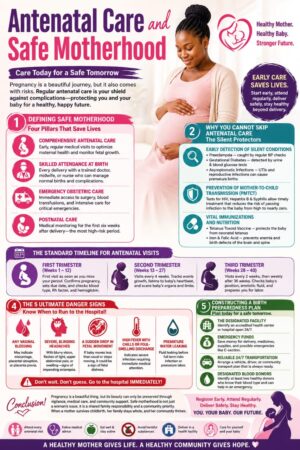
1. Defining Safe Motherhood and Its Essential Pillars
Safe motherhood means ensuring that every woman has access to the full spectrum of care she needs to remain healthy and safe during pregnancy, childbirth, and the postpartum period. This initiative is built upon four indestructible pillars:
- Comprehensive Antenatal Care: Early, regular medical visits to optimize maternal health and monitor fetal growth.
- Skilled Attendance at Birth: Ensuring every single delivery takes place under the care of a trained doctor, midwife, or nurse who can manage normal births and handle immediate complications
- Emergency Obstetric Care: Having immediate access to surgical units, blood transfusions, and intensive care if a critical emergency arises during labor.
- Postnatal Care: Continued medical monitoring for the first six weeks after delivery, which remains the most high-risk window for postpartum bleeding, infections, and depression.
2. Why You Cannot Skip Antenatal Care: The Silent Protectors
A common misconception in many communities is that if a pregnant woman feels fine, she does not need to visit a clinic. This is a highly dangerous assumption. Many of the leading causes of maternal illness and mortality are completely silent; they do not cause pain or obvious symptoms until they reach a life-threatening stage
Regular antenatal care transforms pregnancy from an unpredictable health gamble into a carefully monitored journey through three core interventions:
Early Detection of Silent Conditions
- Preeclampsia: This is a sudden, dangerous spike in blood pressure that can cause organ damage, placental separation, and fatal seizures (eclampsia). It can only be caught early by checking blood pressure at every clinic visit
- Gestational Diabetes: Pregnancy-induced high blood sugar can cause the baby to grow abnormally large, leading to severe birth injuries, or it can cause sudden stillbirth. It is detected through routine urine and blood glucose tests
- Asymptomatic Infections: Silent urinary tract infections (UTIs) or reproductive tract infections can cause amniotic sac infections, leading to early rupture of membranes and dangerous premature births.
Prevention of Mother-to-Child Transmission (PMTCT)
Every routine antenatal screening includes mandatory, confidential blood tests for HIV, Hepatitis B, and Syphilis. If a mother tests positive for any of these conditions, medical teams can immediately begin antiretroviral or antibiotic therapies. These treatments lower the risk of transmitting the infection to the baby from a high percentage down to nearly zero percent, ensuring a healthy newborn
Vital Immunizations and Nutritional Support
- Tetanus Toxoid Vaccine: Pregnant women receive this vaccine to provide immunity that passes directly to the fetus, completely protecting the newborn from neonatal tetanus, a highly fatal lockjaw infection caused by unsterile delivery environments.
- Iron and Folic Acid Supplementation: Iron prevents severe maternal anemia, which causes extreme fatigue and increases the risk of heart failure or fatal bleeding during delivery. Folic acid is mandatory in early pregnancy to prevent birth defects of the brain and spine (neural tube defects).
3. The Standard Timeline for Antenatal Visits
The World Health Organization recommends a minimum of eight medical contacts during pregnancy. For a typical, low-risk pregnancy, these contacts are spaced strategically across the three trimesters:
- The First Trimester (Weeks 1 to 12): The very first visit should happen as soon as a woman misses her period. This visit confirms the pregnancy, establishes an accurate due date via ultrasound, and sets baseline health records for blood type, Rh factor, and hemoglobin levels.
- The Second Trimester (Weeks 13 to 27): Visits occur once every four weeks. Medical teams track the growth of the womb, listen to the fetal heartbeat, and perform an anatomy scan to check the baby’s organs and limbs.
- The Third Trimester (Weeks 28 to 40): Visits accelerate to every two weeks, and eventually become weekly after 36 weeks. Doctors and midwives check the baby’s position (head-down is safest), monitor amniotic fluid levels, and prepare the mother psychologically for labor.
4. The 5 Ultimate Danger Signs: Know When to Run to the Hospital
Education saves lives. Every pregnant woman, her partner, her family, and her neighbors must memorize the five critical warning signs of pregnancy. If any of these symptoms occur, do not wait for a scheduled clinic appointment and do not try home remedies. Go to the nearest hospital immediately:
- Any Vaginal Bleeding: Spotting or heavy bleeding at any stage of pregnancy can indicate a miscarriage, a detached placenta (placental abruption), or a placenta blocking the birth canal (placenta previa).
- Severe, Blinding Headaches: Especially when accompanied by blurred vision, seeing flashes of light, severe upper abdominal pain, or sudden swelling of the face, hands, and feet. These are signs of impending eclampsia.
- A Sudden Drop in Fetal Movement: A healthy baby kicks and moves regularly. If the baby suddenly stops moving or moves significantly less than normal, it is a sign of fetal distress.
- High Fever with Chills or Foul-Smelling Discharge: These symptoms indicate a severe systemic or uterine infection that requires immediate intravenous antibiotics.
- Premature Water Leaking: A sudden gush or a continuous trickle of watery fluid from the vagina before reaching full term means the protective barrier around the baby has broken, risking immediate infection or premature labor.
5. Constructing a Birth Preparedness Plan
Safe motherhood requires proactive planning long before labor begins. When a labor emergency happens, confusion and delay can be fatal. By the seventh month of pregnancy, every family should finalize a written Birth Preparedness and Complication Readiness Plan that outlines four thins:
- The Designated Facility: Identify an accredited health center or hospital that handles deliveries 24/7. Avoid uncertified traditional birth homes.
- Emergency Funds: Secure a dedicated emergency savings fund to cover hospital registration, delivery supplies, medications, and unexpected surgical costs like a Caesarean section.
- Reliable 24/7 Transportation: Arrange a specific vehicle, driver, or community transport plan that is fully fueled and ready to move at any hour of the day or night.
- Designated Blood Donors: Identify at least two healthy adult family members or friends who know their blood type and are willing to come to the hospital immediately to donate blood if the mother suffers severe postpartum bleeding.
Conclusion
Pregnancy is indeed a beautiful thing, but its beauty can only be preserved through vigilance, medical care, and community support. Safe motherhood is not just a woman’s issue; it is a shared family responsibility and a community priority. When a mother survives childbirth, her family stays whole, and her community thrives.
Let us commit today to ensuring that every pregnant woman we know registers early for antenatal care, attends every appointment, and delivers her baby safely in the hands of a skilled healthcare professional.