

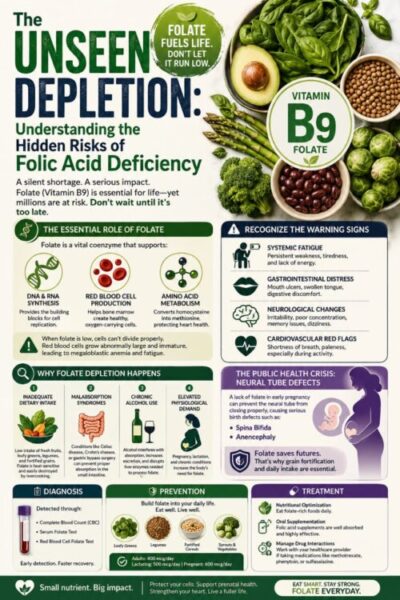
The Unseen Depletion: Understanding the Hidden Risks of Folic Acid Deficiency
Folic acid deficiency is a critical nutritional shortage that impairs cellular division, disrupts DNA synthesis, and leads to severe public health issues like megaloblastic anemia and congenital birth defects. Often overshadowed by highly publicised vitamins like Vitamin C or D, folate (Vitamin B9) serves as an indispensable cellular building block. Because the human body cannot manufacture it and maintains only limited reserves, any prolonged dip in dietary intake or absorption can lead to systemic health problems within just a few months.
The Biological Blueprint of Folate
At a microscopic level, folate functions as a vital coenzyme. According to biochemical insights from clinical studies, tetrahydrofolate (the active form of vitamin B9) facilitates “1-carbon metabolism”. This process is essential for:
- DNA and RNA Synthesis: Providing the essential nucleotide bases needed for cellular replication.
- Red Blood Cell Production: Assisting bone marrow in manufacturing healthy, functional erythrocytes.
- Amino Acid Metabolism: Converting harmful compounds like homocysteine into methionine.
When folate levels plummet, rapidly dividing cells suffer first. Instead of dividing cleanly, red blood cells grow abnormally large and remain immature. This condition, known as megaloblastic macrocytic anemia, prevents the blood from carrying oxygen effectively.
Recognizing the Warning Signs
Folate deficiency develops gradually, but its clinical presentation is widespread. The core symptoms include:
- Systemic Fatigue: Debilitating, persistent weakness and lethargy caused by underlying anemia.
- Gastrointestinal Distress: Painful mouth ulcers, a swollen, smooth tongue, and recurring digestive discomfort.
- Neurological Changes: Heightened irritability, cognitive sluggishness, and chronic dizziness.
- Cardiovascular Red Flags: Shortness of breath and noticeable skin paleness even during light physical activity.
Primary Causes: Why Depletion Happens
Folate deficiency is rarely accidental. It generally stems from one of four core physiological disruptions:
- Inadequate Dietary Intake
Folate is a water-soluble vitamin, meaning excess amounts are excreted in urine rather than stored long-term in fat tissue. A diet low in fresh fruits, leafy vegetables, legumes, and enriched grains will deplete the body’s small reserves within a matter of weeks. Furthermore, folate is highly sensitive to heat; overcooking foods easily destroys the natural vitamin. - Malabsorption Syndromes
Even with a pristine diet, underlying digestive conditions like Celiac disease, Crohn’s disease, or past gastric bypass surgeries can prevent the small intestine from properly absorbing the nutrient. - Chronic Alcohol Consumption
Alcoholism is a frequent driver of severe folate deficiencies. Ethanol directly interferes with the body’s ability to absorb folate in the gut, accelerates its excretion through the kidneys, and alters the liver enzymes responsible for processing the vitamin. - Elevated Physiological Demand
During periods of hyper-growth, the body’s folate requirement spikes dramatically. This is most evident during pregnancy and lactation, as well as in individuals battling chronic hemolytic anemia, where red blood cells are destroyed and replaced at an accelerated rate.
The Public Health Crisis: Neural Tube Defects
The most devastating consequence of folate deficiency occurs during embryonic development. In the first few weeks of pregnancy—frequently before a woman even knows she is pregnant—the fetal neural tube must close perfectly to form the brain and spinal cord.
A lack of folate blocks proper neural cell division. This results in irreversible congenital conditions such as spina bifida (where the spinal cord fails to develop correctly) or anencephaly (the absence of major portions of the brain).
To counter this, public health organizations worldwide mandate the fortification of commercial grain products with synthetic folic acid. These initiatives have successfully reduced the global incidence of neural tube defects.
According to medical guidelines, standard adults require a daily intake of 400 micrograms of folate. This requirement rises to 500 micrograms per day for lactating individuals, and 600 micrograms per day for pregnant individuals.
Diagnosis, Prevention, and Treatment
Diagnosing a deficiency requires complete blood counts and targeted serum or red blood cell folate tests. Once identified, recovery is highly manageable.
- Nutritional Optimization: Emphasizing natural sources of folate such as spinach, asparagus, lentils, Brussels sprouts, and fortified cereals.
- Oral Supplementation: Administering daily oral folic acid supplements, which boast an excellent absorption profile compared to food-bound folates.
- Managing Drug Interactions: Adjusting therapies for patients taking medications like methotrexate or phenytoin, which are known to disrupt folate pathways.
Ultimately, avoiding folic acid deficiency depends on consistent daily nutrition. By recognizing the subtle warning signs and maintaining proper dietary intake, individuals can safeguard their cellular health, support prenatal safety, and protect their long-term cardiovascular well-being.