

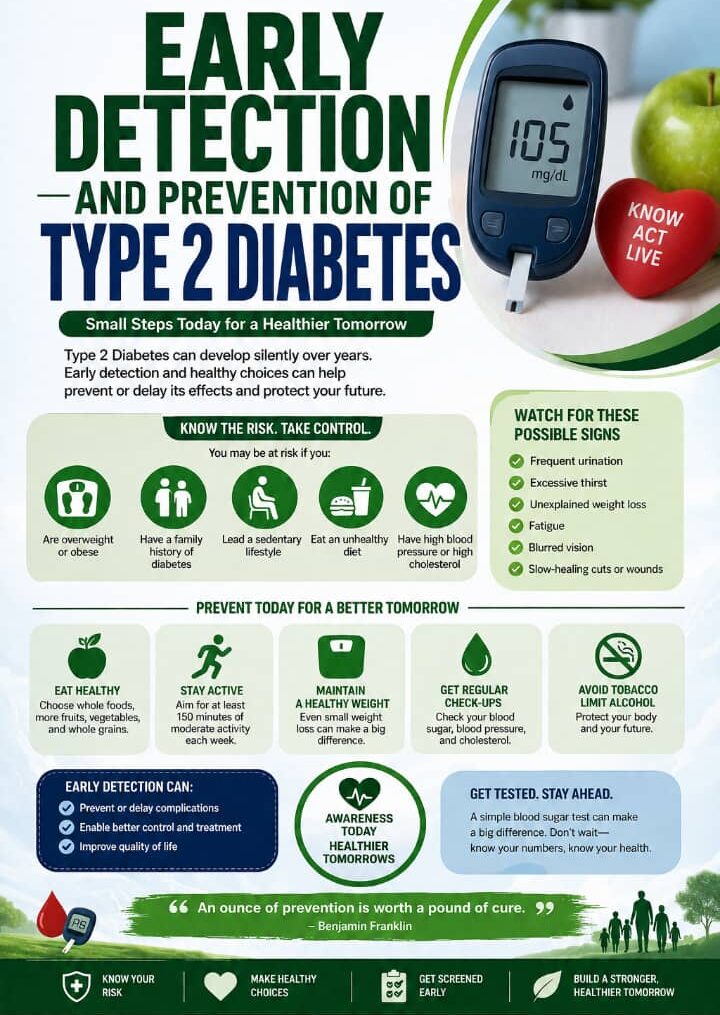
Type 2 diabetes is one of the most significant public health challenges of the modern era. Affecting millions of people worldwide, the disease occurs when the body becomes resistant to insulin or fails to produce enough insulin to regulate blood glucose effectively. If not properly managed, Type 2 diabetes can lead to severe complications, including heart disease, kidney failure, blindness, nerve damage, and stroke. However, with early detection and appropriate preventive measures, many cases can be delayed or even prevented.
A Brief History of Diabetes
Diabetes is not a new disease. Historical records indicate that it was recognized thousands of years ago. Ancient Egyptian medical texts dating back to around 1550 BCE described a condition characterized by excessive urination. The term “diabetes” was later introduced by the Greek physician Aretaeus of Cappadocia in the second century CE and means “to pass through,” referring to the excessive urination associated with the disease. In the seventeenth century, the English physician Thomas Willis added the word “mellitus,” meaning “honey-sweet,” after observing that the urine of affected individuals had a sweet taste. Major progress in understanding diabetes occurred in the nineteenth and twentieth centuries, culminating in the discovery of insulin by Frederick Banting and Charles Best in 1921. This breakthrough revolutionized diabetes treatment and saved countless lives. Today, advances in medical research continue to improve the diagnosis, prevention, and management of diabetes worldwide.
Understanding Type 2 Diabetes
Type 2 diabetes develops when the body’s cells become less responsive to insulin, a hormone produced by the pancreas that helps glucose enter cells for energy. As insulin resistance increases, blood sugar levels rise, eventually leading to diabetes. Unlike Type 1 diabetes, which is caused by an autoimmune reaction that destroys insulin-producing cells, Type 2 diabetes is strongly associated with lifestyle factors and genetic predisposition. The condition usually develops gradually, often without obvious symptoms in its early stages.
Common symptoms include excessive thirst, frequent urination, increased hunger, fatigue, blurred vision, slow-healing wounds, and recurrent infections. Because symptoms may appear slowly or remain unnoticed, many people are unaware they have the condition until complications arise.
Importance of Early Detection
Early detection is crucial in reducing the health risks associated with Type 2 diabetes. Regular medical check-ups and blood glucose screening can identify prediabetes, a condition in which blood sugar levels are elevated but not yet high enough to be classified as diabetes.
Identifying prediabetes provides an important opportunity for intervention. Studies have shown that lifestyle changes during this stage can significantly reduce the likelihood of progression to Type 2 diabetes. Individuals at higher risk include those who are overweight or obese, physically inactive, have a family history of diabetes, are over 45 years of age, have high blood pressure, or have abnormal cholesterol levels. Women who have experienced gestational diabetes during pregnancy also face an increased risk and should undergo regular screening.
Preventing Type 2 Diabetes
The prevention of Type 2 diabetes largely depends on adopting healthy lifestyle habits. A balanced diet is essential. Individuals should consume plenty of fruits, vegetables, whole grains, legumes, lean proteins, and healthy fats while limiting sugary beverages, processed foods, and foods high in saturated fats. Healthy eating helps regulate blood sugar levels and supports overall well-being.
Regular physical activity is equally important. Health experts recommend at least 150 minutes of moderate-intensity exercise per week. Activities such as brisk walking, cycling, swimming, and dancing improve insulin sensitivity and help maintain a healthy weight.
Weight management is another key factor. Research indicates that even modest weight loss can significantly lower the risk of developing Type 2 diabetes among overweight individuals.
Additional preventive measures include getting adequate sleep, managing stress effectively, avoiding tobacco use, and limiting alcohol consumption. Together, these habits contribute to better metabolic health and reduce the likelihood of chronic diseases.
The Role of Education and Community Support
Public awareness and education play vital roles in combating Type 2 diabetes. Schools, healthcare institutions, workplaces, and community organizations can help by promoting healthy lifestyles and encouraging regular health screenings.
Healthcare professionals are also essential in identifying at-risk individuals, providing counseling, and recommending preventive strategies. Community-based programs that promote nutrition, physical activity, and disease awareness can further reduce the burden of diabetes.
Conclusion
Type 2 diabetes is a serious yet largely preventable disease. From its recognition in ancient civilizations to modern scientific breakthroughs, the understanding of diabetes has evolved considerably. Today, early detection through regular screening and the adoption of healthy lifestyle practices offer the most effective means of preventing or delaying the disease. By increasing awareness, encouraging routine health checks, and fostering healthier communities, society can reduce the impact of Type 2 diabetes and improve the quality of life for millions of people worldwide.