

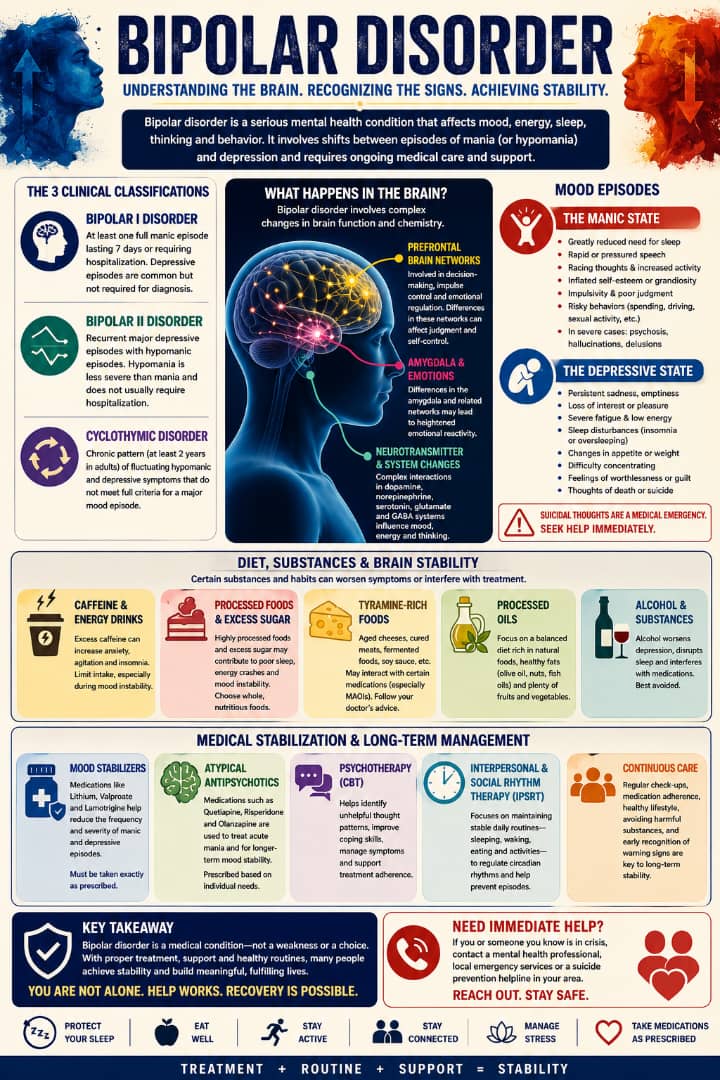
Bipolar Disorder: Understanding the Brain, Clinical Manifestations, and Medical Stabilization
Bipolar disorder is a serious, long-term mental health condition that affects mood, energy, sleep, thinking, and behavior. It is associated with changes in brain function, neurotransmitter activity, circadian rhythms, and the systems responsible for emotional regulation. The condition can cause significant shifts between episodes of mania or hypomania and episodes of depression, making appropriate medical treatment and ongoing monitoring essential.
The Three Main Clinical Classifications
Psychiatrists generally recognize three major forms of bipolar-spectrum illness based on the pattern and severity of symptoms:
Bipolar I Disorder
Bipolar I disorder is characterized by at least one manic episode. Mania typically lasts at least seven days, or may be severe enough to require hospitalization. Episodes of depression frequently occur but are not required to establish a diagnosis of Bipolar I.
Bipolar II Disorder
Bipolar II disorder involves recurrent major depressive episodes accompanied by hypomanic episodes. Hypomania involves increased energy, activity, or irritability, but it is less severe than full mania and does not typically cause the marked impairment, psychosis, or hospitalization associated with mania.
Cyclothymic Disorder
Cyclothymic disorder is a chronic pattern of fluctuating hypomanic and depressive symptoms that do not meet the full criteria for hypomanic, manic, or major depressive episodes. In adults, these symptoms persist for at least two years, with relatively few symptom-free periods.
Neurobiology: What Happens in the Brain?
Bipolar disorder is not simply a matter of personality or lack of emotional control. Research has identified differences in brain networks involved in mood regulation, reward processing, cognition, and circadian rhythms. However, these findings do not mean that every person with bipolar disorder has permanent structural brain damage.
Prefrontal Brain Networks
Areas of the prefrontal cortex are involved in decision-making, impulse control, planning, and emotional regulation. Alterations in the function and connectivity of these networks may contribute to difficulties with judgment and emotional regulation during mood episodes.
Amygdala and Emotional Processing
The amygdala plays an important role in processing emotions, threat, and salience. Differences in how the amygdala and related emotional networks respond to stimuli have been observed in people with bipolar disorder and may contribute to heightened emotional reactivity.
Neurotransmitter and Brain-System Dysregulation
Bipolar disorder involves complex changes across several biological systems, including dopamine, norepinephrine, serotonin, glutamate, and GABA. These systems interact with one another rather than operating as a simple chemical imbalance. Genetics, sleep, stress, circadian rhythms, and environmental factors can also influence the course of the illness.
Clinical Manifestations of Mood Episodes
Bipolar disorder can present through distinct periods of elevated or depressed mood.
The Manic State
Mania can involve:
- A significantly reduced need for sleep without feeling tired.
- Rapid or excessive speech and difficulty slowing down conversations.
- Racing thoughts and increased goal-directed activity.
- Inflated self-confidence or grandiose beliefs.
- Increased impulsivity and poor judgment.
- Reckless spending, risky sexual behavior, dangerous driving, or other high-risk activities.
- In severe cases, hallucinations, delusions, or other psychotic symptoms.
A manic episode can seriously interfere with work, relationships, finances, physical safety, and daily functioning and may require urgent psychiatric intervention.
The Depressive State
A depressive episode may involve:
- Persistent sadness, emptiness, or hopelessness.
- Loss of interest or pleasure in previously enjoyable activities.
- Severe fatigue and reduced physical or mental activity.
- Insomnia or excessive sleeping.
- Changes in appetite or weight.
- Difficulty concentrating or making decisions.
- Feelings of worthlessness or excessive guilt.
- Thoughts of death or suicide.
Suicidal thoughts or plans require immediate professional attention and should never be managed through willpower alone.
Diet, Substances, and Brain Stability
There is no universal list of foods that people with bipolar disorder must completely avoid. However, certain substances and lifestyle patterns can worsen symptoms or interfere with treatment.
Caffeine and Energy Drinks
Excessive caffeine can increase anxiety, agitation, and insomnia. Because sleep disruption can contribute to mood episodes, people with bipolar disorder may benefit from limiting caffeine, particularly during periods of mood instability.
Alcohol
Alcohol can worsen depression, interfere with sleep, impair judgment, and interact with psychiatric medications. Avoiding or significantly limiting alcohol is generally advisable for people receiving treatment for bipolar disorder.
Highly Processed Foods and Excessive Sugar
A balanced diet is important for overall physical and mental health. Excessive consumption of highly processed foods and added sugars may contribute to poor sleep, metabolic problems, and fluctuations in energy, although they should not be described as direct causes of bipolar episodes.
Tyramine-Rich Foods
Aged cheeses, cured meats, fermented foods, and similar products can be important dietary considerations for people taking certain medications, particularly monoamine oxidase inhibitors. They are not generally prohibited because of bipolar disorder itself. Anyone taking psychiatric medication should follow the specific dietary instructions provided by their clinician.
Processed Oils
There is currently insufficient evidence to state that ordinary consumption of canola, corn, or soybean oils causes bipolar episodes or prevents repair of the prefrontal cortex. A balanced diet emphasizing minimally processed foods, vegetables, fruits, whole grains, legumes, and appropriate sources of protein and healthy fats is a more evidence-based approach.
Medical Stabilization and Long-Term Management
Bipolar disorder usually requires ongoing treatment rather than treatment based solely on willpower. The specific treatment plan depends on the person’s diagnosis, current episode, medical history, medications, and response to treatment.
Mood Stabilizers
Lithium is an important long-term treatment for bipolar disorder and can reduce the risk of manic and depressive episodes. Other medications, including valproate and lamotrigine, may be used depending on the individual’s clinical needs.
Atypical Antipsychotics
Medications such as quetiapine, risperidone, and olanzapine may be prescribed for acute mania and/or longer-term mood stabilization. The choice depends on the symptoms and individual circumstances.
Psychotherapy
Cognitive Behavioral Therapy (CBT) can help individuals recognize unhelpful thought patterns, develop coping strategies, improve adherence to treatment, and manage depressive symptoms.
Interpersonal and Social Rhythm Therapy
Interpersonal and Social Rhythm Therapy (IPSRT) focuses on maintaining stable daily routines, particularly consistent sleeping, waking, eating, and activity patterns. Regular routines can support healthy circadian rhythms and may help reduce vulnerability to future mood episodes.
The Importance of Continuous Care
Bipolar disorder is a manageable medical condition, but effective management often requires consistency. Medication adherence, adequate sleep, regular clinical appointments, psychotherapy, avoidance of harmful substances, and recognition of early warning signs can all contribute to stability.
Family members and caregivers also play an important role. Sudden severe insomnia, rapidly escalating energy, extreme impulsivity, psychotic symptoms, suicidal thoughts, or behavior that places the person or others at immediate risk should be treated as warning signs requiring urgent professional assessment.
Bipolar disorder does not define a person’s identity or potential. With appropriate treatment, support, and long-term management, many people with bipolar disorder are able to achieve substantial stability and live productive, fulfilling lives.

