

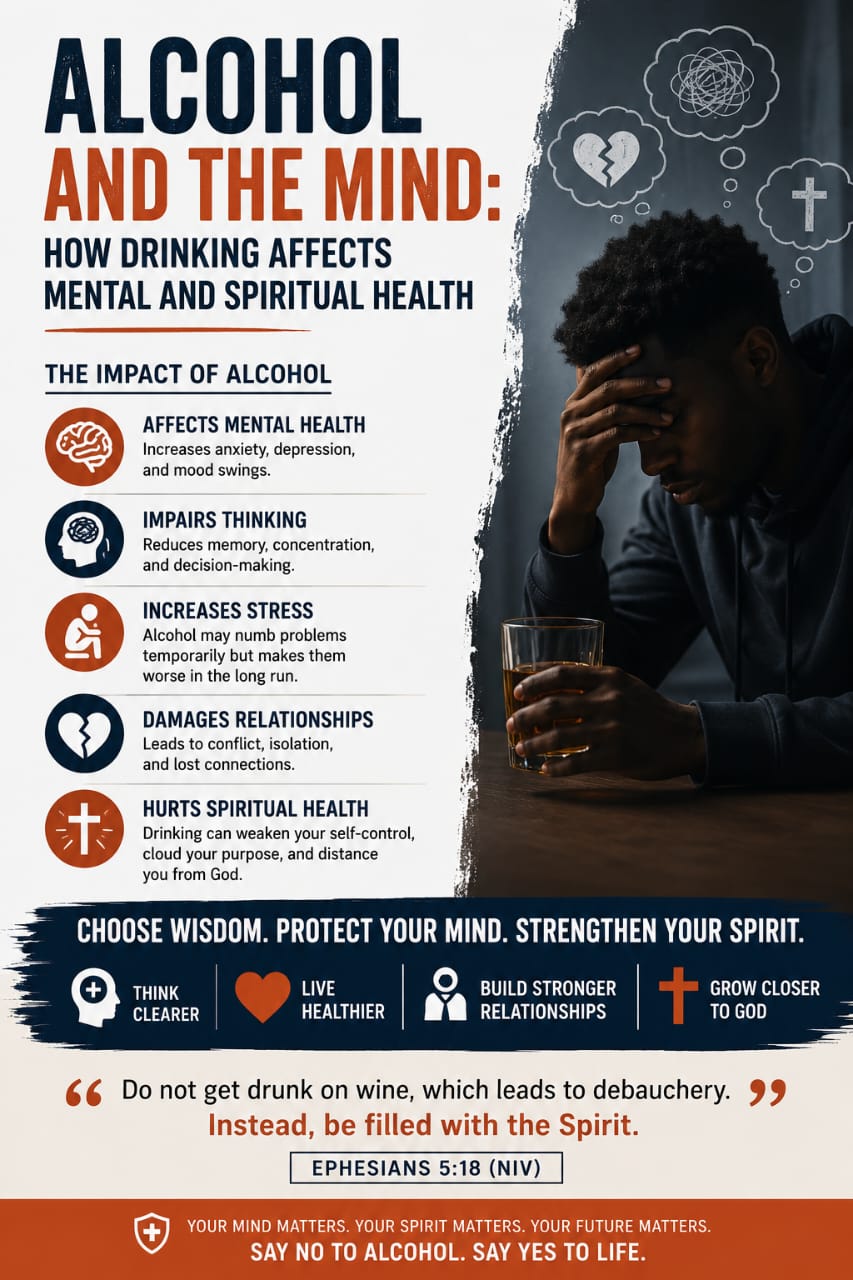
The first article in this series examined the physical damage alcohol inflicts on the human body. This piece shifts focus to a less visible but equally serious consequence, the toll alcohol takes on the mind and the inner spiritual life of a person.
Among young people especially, drinking is frequently treated as a harmless, light hearted social ritual. Yet the erosion of mood, cognitive clarity, and spiritual wellbeing often runs deep, persisting long after the physical effects of the drink itself have worn off.
How Alcohol Works on the Mind:
Physiologically, alcohol is a central nervous system depressant. It slows brain activity and disrupts the chemical messengers responsible for regulating mood, memory, and baseline behavior. Even a single evening of heavy consumption can leave a person in a state of cognitive fog, irritability, or emotional vulnerability the following day. Repeated over months and years, this interference reshapes how the brain manages stress, processes pleasure, and maintains self control, often through subtle shifts that go unnoticed until real psychological damage has taken hold.
|
INTOXICATION The starting point, where alcohol first enters the brain’s chemical system. |
CHEMICAL SPIKES
|
BRAIN COMPENSATION
|


Over time, these two tracks converge into a lasting mental and spiritual toll, deepening depression, wearing down psychological resilience, and straining a person’s sense of connection to their faith.
Why This Happens: The Chemical Reality:
This decline is rooted in direct chemical disruption. Alcohol artificially raises GABA, a chemical that increases sedation and sluggishness. At the same time, it suppresses glutamate, which the brain relies on for learning, memory, and quick thinking. It triggers a temporary rush of dopamine, feeding the reward and craving loop that drives addiction, while destabilizing serotonin, the chemical most responsible for steady mood. With repeated exposure, the brain adjusts to these swings, so mood problems and thinking difficulties begin appearing even during stretches when a person is not drinking at all.
Mental Health Insights from WHO and APA
Leading health organizations have documented how closely alcohol misuse and mental health struggles are linked.
The World Health Organization identifies a strong two way relationship between harmful alcohol use and mental health disorders, noting that alcohol misuse frequently occurs alongside major depression and generalized anxiety. For younger drinkers, the organization points to acute intoxication as a driver of impaired decision making, which in turn is tied to spikes in impulsive self harm, interpersonal violence, and suicide attempts.
The American Psychological Association notes that many people turn to alcohol as a form of self medication for social anxiety or stress, only to face a sharp neurochemical backlash once the alcohol clears the system, a state known as rebound anxiety, which traps the drinker in a worsening cycle of distress. The association also points out that for young people already managing conditions such as ADHD or bipolar disorder, alcohol blunts the effectiveness of psychiatric medication, undercutting progress that took real effort to achieve.
Sources: World Health Organization, Alcohol Fact Sheet; American Psychological Association, Clinical Insights on Risky Alcohol Use.
The Mental Health Effects of Alcohol:
1. Depression and Emotional Instability
Alcohol can bring on depressive episodes or deepen an existing one. Heavy drinking carries a strong link to rising suicidal thoughts, since the substance strips away behavioral restraint at the exact moments a person may already be facing overwhelming distress. Mood swings, sudden irritability, and flashes of anger are common companions of regular drinking, leaving the people closest to the drinker uncertain and on edge.
2. Anxiety Disorders
A drink may calm frayed nerves for an hour or two, but that relief comes at a cost. As the effect fades, many people experience rebound anxiety, a sharp return of unease that often feels worse than the original stress. Regular heavy drinking can eventually bring on panic attacks and lock the mind into a lasting state of generalized anxiety.
3. Alcohol Dependence
With continued exposure, the brain and body adjust to alcohol’s constant presence. This shows up as cravings, rising tolerance, painful withdrawal symptoms, and a gradual loss of control over how much or how often a person drinks. Dependence spreads quickly into other parts of life, straining work, damaging relationships, and wearing down physical health at the same time.
4. Cognitive Impairment and Wernicke Korsakoff Syndrome
Under chronic use, concentration weakens and short term memory falters, sometimes escalating into full blackouts where entire stretches of time vanish from memory. Long term misuse also interferes with the body’s ability to absorb thiamine, known as vitamin B1, a nutrient essential to brain health. The resulting deficiency can cause Wernicke Korsakoff syndrome, a serious condition marked by confusion, poor coordination, abnormal eye movements, and severe, often lasting memory loss.
5. Psychosis and Severe Withdrawal
In cases of extreme consumption or sudden withdrawal, some people experience hallucinations and delusions, a condition known as alcohol induced psychosis. Severe withdrawal can also lead to delirium tremens, a medical emergency marked by severe tremors, confusion, and dangerous strain on the heart, requiring immediate treatment.
6. Sleep Disturbances
Alcohol disrupts the natural structure of sleep. Rather than deep, restorative rest, drinkers experience broken sleep, frequent waking through the night, and heavy fatigue the next day. Over time, this steady loss of quality rest wears down a person’s psychological resilience.
7. Worsening of Existing Mental Illness
For those already managing conditions such as bipolar disorder, schizophrenia, ADHD, or personality disorders, alcohol tends to intensify symptoms rather than ease them. It can also weaken the effect of prescribed psychiatric medication, undoing hard won progress.
Harmful Alcohol Effects on Spiritual Health:
Harmful alcohol use affects spiritual health by dulling spiritual sensitivity, weakening self control, and straining a person’s relationship with God. Scripture does not single out every mention of wine for condemnation, but it consistently warns against drunkenness and against being governed by any substance rather than by the Holy Spirit. A spiritually grounded life is one led by the Spirit rather than controlled by alcohol or any other outside influence, and harmful drinking weakens communion with God, compromises a holy walk, and reduces a believer’s effectiveness in fulfilling their purpose.
It Weakens Fellowship with God
Intoxication dulls spiritual awareness, placing a barrier between a person and deliberate prayer, sincere worship, and a listening heart.
 But your iniquities have separated between you and your God, and your sins have hid his face from you.
Isaiah 59:2, KJV
It Replaces the Leading of the Holy Spirit
Rather than being led by the quiet promptings of the Spirit, an intoxicated person hands their choices over to the influence of alcohol, and the two cannot govern a life at the same time.
 And be not drunk with wine, wherein is excess; but be filled with the Spirit. Ephesians 5:18, KJV
It Impairs Wisdom and Judgment
Alcohol clouds discernment and sound decision making, lowering behavioral restraint and making it far easier to fall into destructive choices.
 Wine is a mocker, strong drink is raging: and whosoever is deceived thereby is not wise. Proverbs 20:1, KJV
It Weakens Self Control
Scripture names self control as a fruit of the Spirit, yet drunkenness removes that very restraint, replacing discipline with reckless behavior.
 But the fruit of the Spirit is love, joy, peace, longsuffering, gentleness, goodness, faith, meekness, temperance: against such there is no law. Galatians 5:22 to 23, KJV
It Hinders Holy Living
Drunkenness is named among the works of the flesh, standing against a life aligned with God’s will and pulling a believer away from an upright walk.
 Now the works of the flesh are manifest, which are these… envyings, murders, drunkenness, revellings, and such like, of the which I tell you before, as I have also told you in time past, that they which do such things shall not inherit the kingdom of God. Galatians 5:19 to 21, KJV
It Can Enslave the Believer
God calls His people to live in genuine freedom rather than under the mastery of an addictive substance, and chronic alcohol misuse creates a dependency that shifts a believer’s reliance away from God.
 All things are lawful unto me, but all things are not expedient: all things are lawful for me, but I will not be brought under the power of any. 1 Corinthians 6:12, KJV
For a young person raised within these values, regular heavy drinking often breeds a quiet, ongoing inner conflict. Guilt builds. Prayer and reflection fade. A sense of distance grows between the individual and the faith community that once anchored them. This spiritual erosion rarely announces itself with the urgency of a medical diagnosis, yet it can leave a young person feeling hollow, displaced, and far from the values they were raised to hold.
Closing Thoughts:
The mind and the spirit do not exist apart from the body, they carry the weight of what a person consumes just as surely as the liver or the heart. The damage alcohol does to mood, memory, and inner peace tends to build quietly, hidden behind laughter at a party or the routine of a weekend drink, until the cost becomes impossible to ignore. Recognizing these warning signs early, and choosing paths that protect both the mind and the spirit, gives young people a stronger foundation for the years ahead.
 Whether therefore ye eat, or drink, or whatsoever ye do, do all to the glory of God.
1 Corinthians 10:31, KJV
This instruction stands as a fitting measure for the believer, a reminder that even everyday choices around consumption can honor the body as something worth protecting, and keep a clear path toward a life of purpose.

